



Milk Magazine: 5 Questions for Sophie Demenge Co-founder of children’s furniture brand Oeuf NYC
 English Translation-
1. There is a lot of talk today about furniture that “grows with the child.” What does that really mean to you?
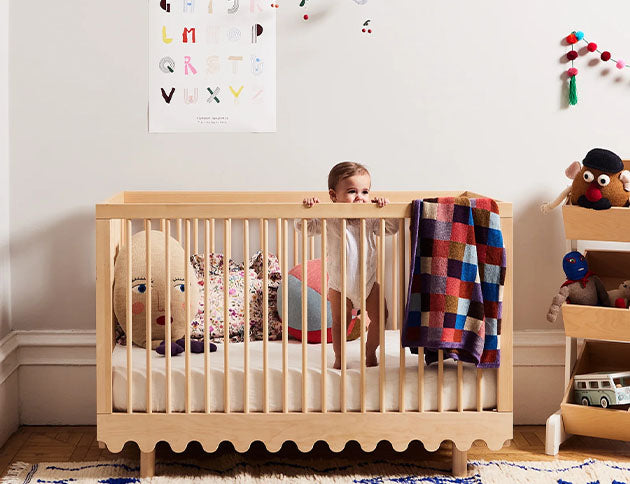
A piece of adaptable furniture is not simply something you add an extra component to so that it can be marketed that way. It should respond to a genuine evolution in the life of the child and the family.
It might be a crib that becomes a toddler bed, a bunk bed that separates into two individual beds, or a piece that naturally takes on a different function over the years. But adaptability also comes through simplicity of design. A piece that is well considered and timeless enough can stay with a child for many years, then find a place elsewhere in the home or with another family.
For me, the goal is not to make a piece do more things, but to make it last longer.
2. How do you design furniture that encourages children’s independence from an early age?
By looking at the world from their height. It sounds obvious, but many children’s spaces are still designed entirely by adults, for adults.
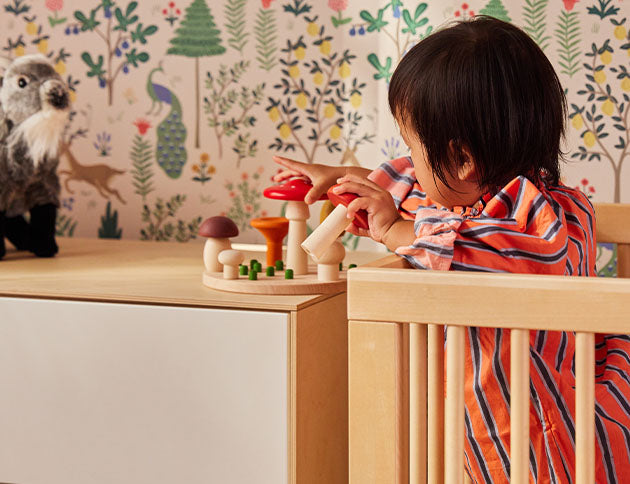
Encouraging independence means allowing a child to reach a book on their own, put away their toys, choose an item of clothing, or climb into bed without asking for help. These are small gestures, but they build self-confidence.
Furniture should not impose independence. It should simply make it possible.
3. In a child’s room, which pieces are truly worth investing in?
The pieces that are used the most, and those that are most closely connected to a child’s safety: the bed, the dresser, and everyday storage. A good bed will be used every night for years. A well-made dresser can later become storage in another room. These are objects that live very intensely: children climb on them, open them a thousand times, bump into them, and transform the way they use them.
I would always rather encourage families to buy less, but choose furniture that is well designed, repairable, and strong enough to last through several childhoods.
4. Children’s rooms today are very often inspired by trends on social media. How do you create an environment that can outlast those trends?
You have to try to design the room for the child who lives in it, rather than for the photograph you are going to post of it.
Trends can be fun and inspiring, but they shouldn’t dictate the entire space. A room becomes interesting when it develops over time: drawings, beloved books, found objects, travel memories, handmade things. I believe strongly in simple foundations, with color, playfulness, and more personal elements layered on top. It is often the imperfections and unexpected combinations that give a room its soul.
5. What makes a piece of children’s furniture remain relevant over the years?
The right proportions, the quality of the materials, and a certain restraint in the design. Children’s furniture does not need to look childish. It can be joyful, gentle, or surprising without becoming overly decorative or themed. When a form is simple, balanced, and honest, it ages better. You also have to accept that furniture will carry traces of life. A small mark, a patina, or a slightly worn corner can tell a story. A piece that lasts through the years is not necessarily one that remains perfect, but one that continues to be loved.
Continued
6. You created Oeuf more than twenty years ago. In your view, what has never changed about children’s needs?
The need to feel loved, safe, and free to explore. Children need a reassuring framework, but they also need space to imagine, move, make mistakes, and begin again. The world around them changes very quickly, but these essential needs remain the same. They also need us to respect their scale, their rhythm, and their own particular way of inhabiting a space.
7. When you design a piece of furniture for a child, what comes first? Supporting their development, meeting parents’ expectations, leaving room for play…?
My first priority is always the child: their safety, comfort, independence, and the way they will actually live with the piece. But good children’s furniture should also make life easier for parents. It needs to be intuitive, durable, and easy to live with in the home.
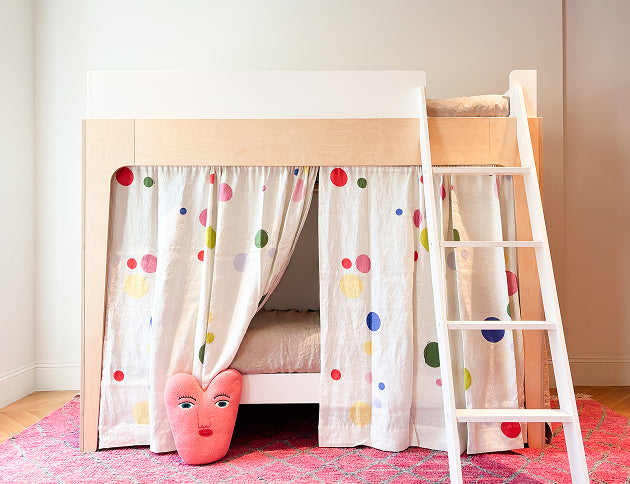
Above all, it shouldn’t decide everything for the child. I like furniture that leaves room for imagination. A bed can become a den, a boat, or a refuge. The design provides the framework, but the child writes the story.
8. Does beauty have a role to play in a child’s development? How does the visual environment contribute to their awareness and growth?
Yes, profoundly. Not beauty in the sense of something precious or sophisticated, but beauty as a form of care.
Children are extremely sensitive to color, materials, light, proportion, and the way things are arranged. They notice far more than we imagine. A harmonious environment can bring a sense of calm, spark curiosity, and develop their sensitivity.
Beauty also tells them that they matter. That it is worth creating objects for them that are thoughtful, well made, and pleasurable to live with.
9. Sustainability has been at the heart of Oeuf from the beginning. How does that conviction influence the way you design a collection?
Sustainability begins long before the choice of material. It begins with a very simple question: does this object really deserve to exist?
We try not to create things simply to fill out a collection or follow a trend. Every piece needs a reason to exist, to bring something new, or to respond to a need in a better way.
Then come the materials, manufacturing, safety, working conditions, and the possibility of repairing or passing the furniture on. We have been manufacturing in Europe for more than twenty years, close to our raw materials and with partners we have known for a long time.
But perhaps the most important form of sustainability is attachment. We take care of the things we love. A piece of furniture that is kept, repaired, and passed on will always be more sustainable than one designed to be replaced.
10. Is there a piece of furniture or an object from your own childhood that still stays with you, consciously or unconsciously, when you design for children?
More than one particular piece of furniture, I think it is certain sensations that come back to me: improvised forts, secret corners, fabrics to hide beneath, objects used for purposes they were never intended for. As a child, you don’t need very much to invent a world. A chair, a blanket, and a little space can be enough.
That is probably what I am still looking for when I design today: to create objects that are present enough to feel reassuring, but open enough to disappear behind the child’s imagination.